
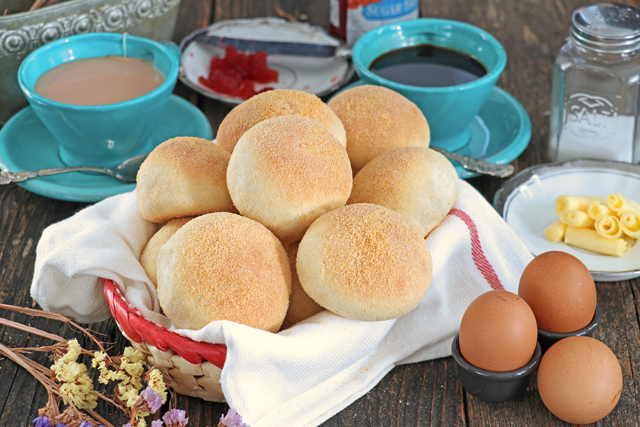
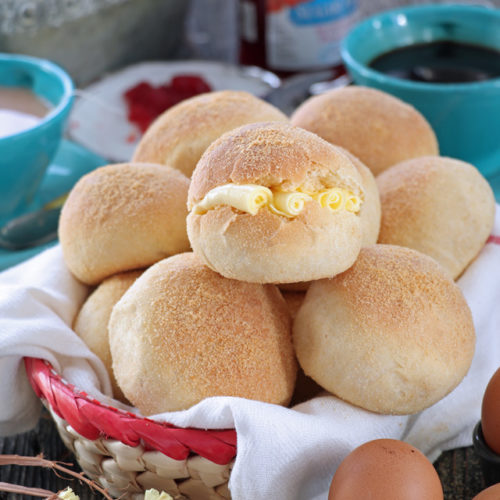
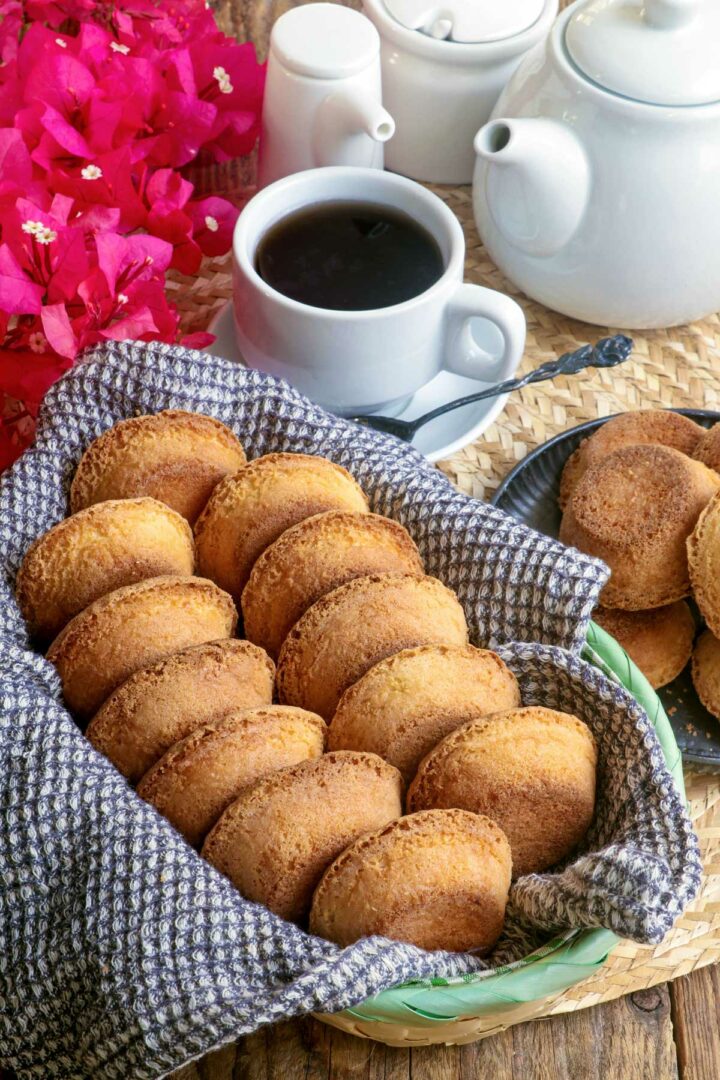
Pandesal is a classic Filipino bread roll that is particularly eaten for breakfast. It is soft and airy and slightly sweet. Normally eaten as a sandwich with one's favorite filling.
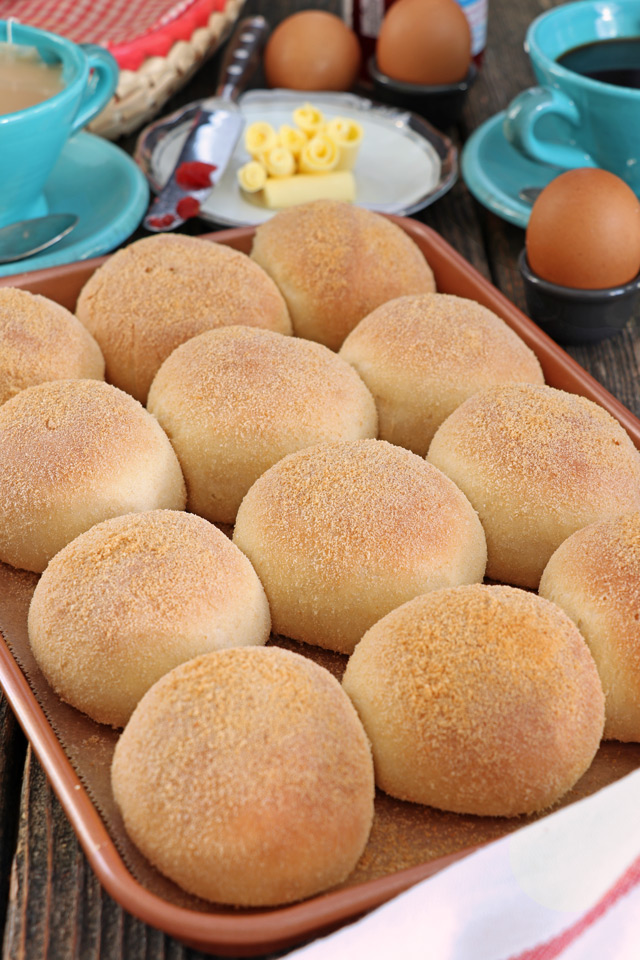
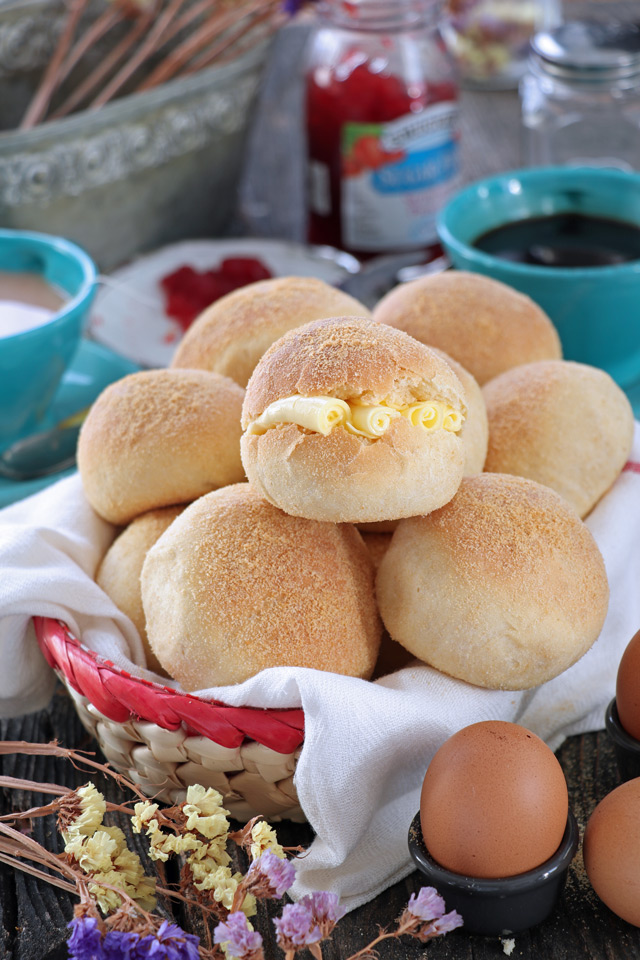
Pandesal is probably the most popular bread in the Philippines. It is a favorite breakfast that can be eaten on its own, dunked in coffee or with filling like coconut jam, peanut butter, cheese, cheese spread, corned beef, egg, hotdogs or practically anything you can think of or whatever leftovers you have laying in your fridge.
One of my faves is mushed spicy sardines...yup! But I remembered a time when we were just small kids, my Kuya Norman's and I would have ketchup with sugar as filling...eeewww, right? But that tasted so good to us at that time! Haha! Yeah, I have to admit I tried a lot of weird stuff just because my big brother thinks it is good or cool. Hehe!
What is Pandesal?
A traditional Filipino breakfast roll, that used to be sold only in early hours at bakeries or on the streets by vendors on bicycles with loud air horns. They would put the Pandesals in a big insulated box to keep them warm. But, nowadays, some bakeries make them available for the entire day.
It is called Pandesal or Pan de Sal (Spanish) that translates to salted bread although it is actually sweeter than salty. It is soft and fluffy and covered with breadcrumbs.
What are the Ingredients for Pandesal?
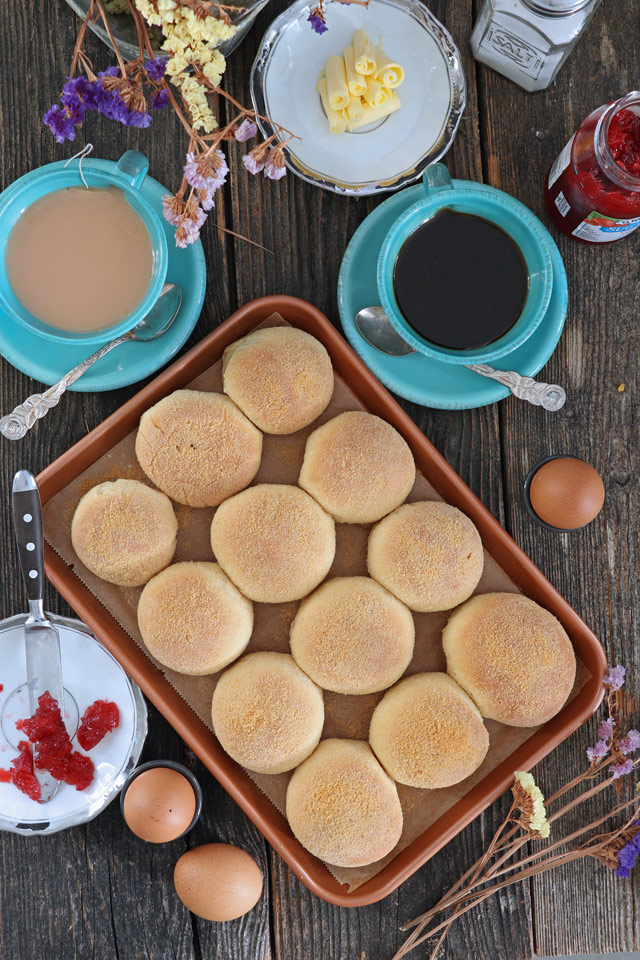
Basically, you can already make pandesal with just 5 ingredients: flour, yeast, oil or lard, sugar, and salt. Six if you have to include water.
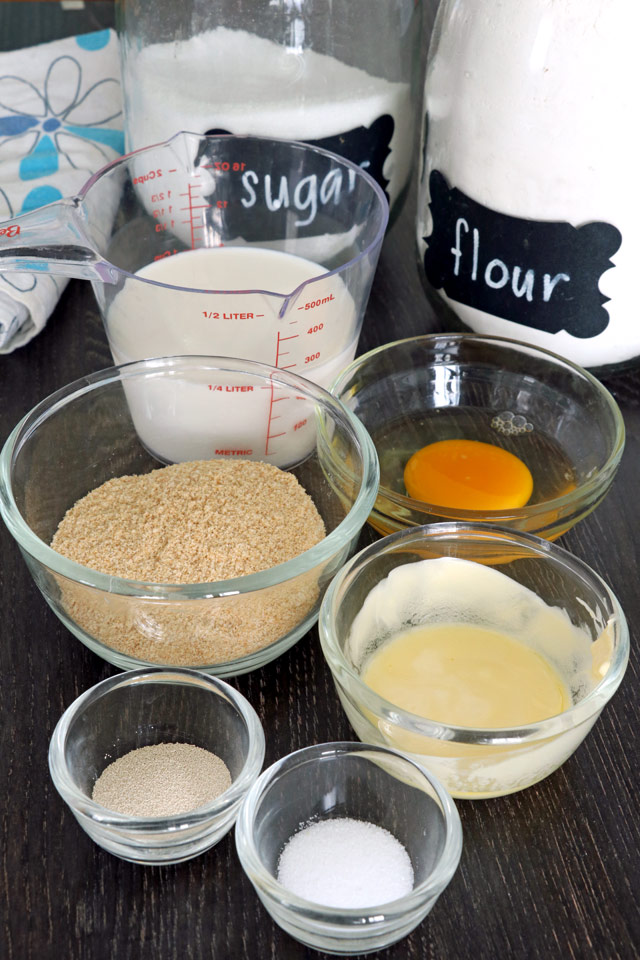
This recipe replaces the water with milk and adds eggs. Both of them giving these pandesals a softer texture, both inside and to the crust, and gives a richer flavor. The eggs also help the dough rise higher.
I also use butter or sometimes margarine that adds that delicious buttery goodness.
A note about flour...
The original recipe I posted here in 2015 was made when we were still living in Germany. When I used the same recipe here in the Philippines, the outcome is different. They taste great but were a little denser and dryer.
This is because of the flour used. The flour that I used in Germany is finer or "softer" which tends to absorb lesser liquid. The recipe (way) below is the original recipe I used for that. The flour I usually use in the Philippines is similar to the ones in the US, Gold Medal APF. This one requires more liquid so I adjusted the recipe here.
Remember—different types of flour has different flour-to-water ratio. The higher the protein/gluten content, the more water it needs. Also important to note, not all-purpose flour acts the same. Different brands have different ways of processing their flour and different contents.
If the dough feels too dry then simply add more water, or if too sticky then add flour. The dough should feel pliable or easy to knead and not too sticky.
You can also use bread flour if you are looking for a chewier pandesal. Mix them in equal parts to get a moderately chewy but softer ones. But remember that bread flour absorbs more liquids so you may need to adjust.
Other Filipino Bread Recipe to Try:
- Spanish Bread - Similar to Pandesal but with a sweet buttery filling
- Cheese Bread - Sweet dough bread covered in milky streusel
- Ensaymada - pillowy bread topped with buttercream and grated cheese
How to Make Pandesal
Printable Recipe
Pandesal Recipe - Soft and Buttery
Ingredients
- 3 cups all-purpose flour - see NOTE 1 about bread flour
- ¼ cup sugar
- 1 teaspoon salt
- 1 cup milk - lukewarm
- 1 egg
- 2 tablespoon butter - melted (or margarine)
- 1 ½ teaspoon instant dry yeast - see Note 2
- ¼ cup breadcrumbs
Instructions
- In a big bowl, mix together flour, sugar, salt.
- Pour in milk, beaten egg and melted butter. Mix several times until well blended. Make sure that the milk is only mildly warm and not hot.
- Add the instant dry yeast and fold until a sticky dough forms.
- Tip the dough on a floured surface and knead until it becomes smooth and elastic, about 5-10 minutes.
- Form the dough into a ball and lightly coat with oil. Place it in a bowl and cover with a kitchen towel or plastic wrap and place it in a warm area and let it rise until it doubled in size. Depending how warm it is, could take 30 minutes to an hour.
- Punch down the dough and divide into 2 equal parts using a knife or dough slicer. Roll each into a log. Cut each log into 6 smaller pieces.
- Shape each piece into a ball and roll it in breadcrumbs, completely covering all sides.
- Arrange the pieces on a baking sheet leaving some gaps in between (at least an inch). Leave them to rise second time until double in size.
- While waiting, preheat oven 370° F /185°C. Bake the Pandesal for 15 minutes or until the sides are a bit browned.
- Remove from oven and serve while hot!
Notes
Nutrition
This post was originally published in September 2015. Updated to include new images and some improvements on the recipe.
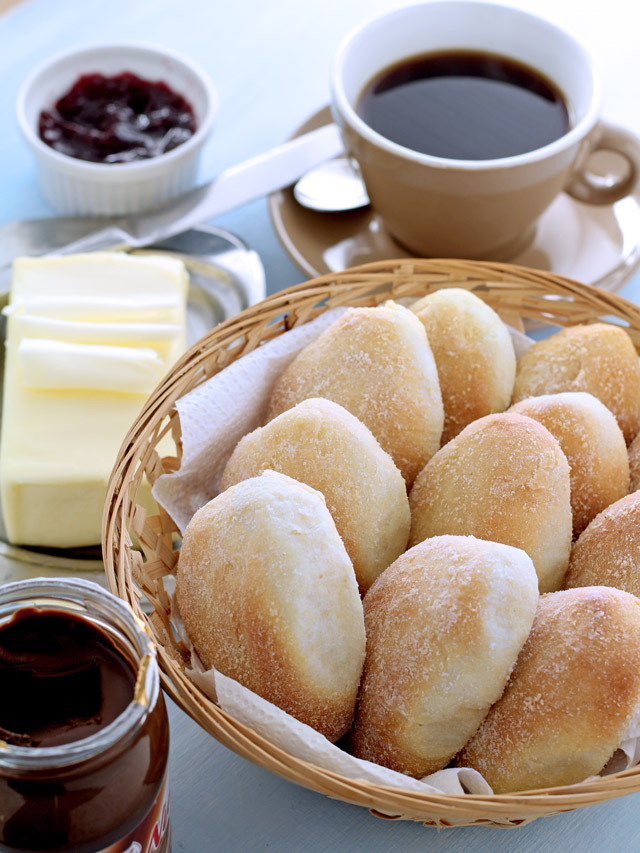
For those who still want to use the old recipe, here it is. The main difference is the shaping of the individual rolls. The old version is the traditional pandesal shape that is slightly elongated with pointy ends.
3 cups flour
1 ½ teaspoon instant dry yeast
¼ cup + 1 tablespoon sugar
1 teaspoon salt
¾ cup milk
3 tablespoon margarine - or butter (melted)
1 egg
½ cup breadcrumbs
In a big bowl, mix together flour and yeast. In a smaller bowl, combine sugar, salt, milk and margarine or butter. Warm liquids in the microwave until warm. Remove from microwave and add the egg and beat several times until well blended. Make sure that the liquids are only mildly warm and not hot.
Pour the liquid mixture over the flour mixture and fold until dough forms. Knead the dough on a clean surface dusted with flour until it becomes smooth and elastic, about 5-10 minutes.
Form the dough into a ball and place the dough in a greased bowl and cover with a kitchen towel or plastic wrap and place it in a warm area and let it rise until it doubled in size. Depending on how warm it is, could take 30 minutes to an hour.
Punch down the dough and divide it into 2 equal parts using a knife or dough slicer. Roll each into a log. Cover each log with breadcrumbs. Cut the log sideways into smaller pieces. (about 6 pieces each log). Roll each piece with breadcrumbs again.
Arrange the pieces on a baking sheet living some gaps in between (at least an inch). Leave them to rise for another 10-15 minutes.
While waiting, preheat oven 370° F /185°C. Bake the Pandesal for 15 minutes or until the sides are a bit browned.
Remove from oven and serve while hot!
Kat says
This is terribly sticky but worth the pain kneading it. It’s the softest recipe out there and it’s a perfect pair for anything you want. I just wanted it to be on a buttery side as I remember the days back home, how can I achieve that bakery-butter scent? Thanks!
Bebs says
Hi Kat, Hi! So glad you loved how soft it turned out! 😊 For that classic bakery butter scent, I think they use margarine as they are cheaper than butter but made to more aromatic and more appealing. So you could swap half or the whole amount of butter with it.
Caroline says
The recipe is quite good and easy to follow. However, I'm still craving for the saltier version (or less sweet) with a crispier crust.
Is there a way to vary the recipe to achieve that?
Bebs says
Hi Caroline, glad you enjoyed it! This recipe leans to soft and slightly sweet pandesal, but you can tweak it to get that more rustic flavor: cut the sugar to about 2 tbsp for less sweetness, and add a pinch more salt. For crispier crust, swap the milk with water and the butter with oil. Let me know how how it goes.
Elle says
The best recipe of pandesal I’ve found!!! Finally after trying 8 different recipes, success din after trying this recipe. I wanna cry!! Thanks sis for sharing your recipe. I just added powdered milk for more softness. This will be my to go pandesal recipe now.
Lola says
It comes out good, I think. It's fluffy when it's fresh out of the oven but rather dense after it's cooled. Is it supposed to be this way?
Also, the dough is just too sticky to knead with just 400g/3 cups of flour. I've had to add around double the amount of flour throughout the kneading process to stop it from being so sticky.
I've followed this recipe 3 times and am still struggling with the same issues. Is there anything I can do to improve the result?
Bebs says
Hi Lola, this dough has indeed high hydration ratio and that makes it soft and stays soft and fresh longer. If you doubled the amount of flour during kneading then the ratio is no longer correct, thus, you get a denser buns.
For sticky dough, like this one, you need to learn how to knead it properly. use more oil on your hands and surface instead of adding a lot more of flour. Use the slap and fold technique of kneading. Just practice a bit more and you will get the perfect pandesal (or any nice fluffy buns/bread) in no time.
Michelle says
Tried this recipe and went perfect! Very soft and fluffy!! Thank you!
Jill says
Can I use stand mixer instead of manual kneading?
Bebs says
Hi Jill, yes, a stand mixer works great! Use the dough hook on low-medium speed for about 8-10 minutes, until smooth and elastic. The dough is meant to be sticky, so resist adding extra flour — that's what keeps the pandesal soft.
GrAsYa Sembrano says
Can I use Vegetable oil instead of butter?
Bebs says
Hi Grasya, yes, you can use vegetable oil in place of butter and it'll still be soft and tender. You'll just lose some of that rich, buttery aroma, so if you want that bakery scent, stick with butter or margarine. Otherwise, oil works fine.
Liz Holt says
can i use my stand mixer ? how long and what setting?
Bebs says
Hi Liz, yes! Use the dough hook on low-medium speed for about 8-10 minutes, until the dough turns smooth and elastic. It'll still feel sticky but should not stick to the sides of the bowl— that's normal and part of what keeps pandesal soft, so avoid adding extra flour just to fix that.
Jess says
My house smells amazing after I cooked them today! Will the bread get hard and dry if more sugar is added? I would prefer it to be a bit sweeter. How can I make it less dense and more airy?
Bebs says
Hi Jess, I love that buttery smell, too 😊! Adding more sugar won't dry it out, so feel free to add 1-2 more tablespoons. For a lighter, airier crumb, make sure your yeast is fresh, let it rise fully until doubled, and avoid over-flouring since the dough should stay soft and slightly sticky. Try also using 50/50 APF and bread flour and add just a bit more water or milk.
Yi De Guzman says
Bebs, oh my gosh! I've made this twice, and have never been disappointed.
It's perfect: the chewiness, the moistness, the density, the sweetness. My family absolutely loved them! Thank you so much for sharing your recipe! It's my go to recipe now for pan de sal.
Bebs says
Hi Yi, thank you so much for this lovely message! I'm beyond happy this is now your go-to pandesal recipe. Comments like this truly make my day! 🥰
Koloy says
I am here and this is my second time trying this recipe. I just loved the results every time.
Bebs says
Hi Koloy, so glad you're loving the results every time! Thanks for coming back to make it again. 😊
Owmiee says
My husband loves pandesal. We always buy from the bakery or nearby "bakala" or store who sells pandesal. When we experienced the challenging times in Kuwait due to the US-Iran war, the supply of our fave pandesal in the nearby bakala was stopped. Their bakery is located in Salmiya but unfortunately due to the war, we are afraid to go out unecessarily. This, I decided to bake our own pandesal at home. This was the first recipe that popped up of google and because of its simplicty and well explained recipe, I decided to follow it and viola! I used bread flour.. and the pandesal turned out soft and of course chewy just rhe way we like it. Thank you so much for sharing this recipe. I love the aroma of the bread after baking it. 😃💚
Bebs says
Hi Owmiee, thank you for sharing your story — I'm truly touched this recipe could bring a taste of home during such a hard time. So glad it turned out soft and chewy just how you like it. Wishing you and your family safety and comfort. 💚
Jayne says
Best pandesal recipe that I've tried to date. 💚
Bebs says
Hi Jayne, thank you so much, that means a lot! 💚
lia says
is it okay to substitute regular milk into almond milk?
Bebs says
Hi Lia, yes, you can use almond milk instead of regular milk. It may turn out very slightly less rich and soft since almond milk has less fat than dairy, but it should still work nicely. 😊
Faye says
What I made from this recipe must have lacked kneading and probably rising... i (kneading: 10mins, first rise: 1hr, 2nd rise: 50mins) baked for 15mins at 185• personally find this pandesal heavy in the tummy... perhaps the egg (?) perhaps the bread flour (?) (i used 1:1 of APF and Bread Flour...
I prefer a lighter texture... maybe because I am used to the commercially made ones 🤔 or the old panaderia style light but chewey...
Bebs says
Hi Faye, did you add more water/milk using 50APF/50BF? Please note that bread flour normally needs more liquid to hydrate. You can also try using 1 cup BF and 2 cups APF, using a bit more all-purpose flour compared to bread flour can also lighten things up, since bread flour makes it chewier and denser. As for the rising time — cooler kitchens and different flour blends slow things down.Try extending your rises until truly doubled for a lighter crumb next time!
Lenzi says
Do you use white or brown sugar?
Bebs says
Hi Lenzi, I use regular white sugar in this recipe.
Cheryl says
Made it once and it’s perfect! Fluffy, soft - just absolutely yummy! I’m hooked and now baking my 3rd batch! Thank you very much for such easy to make pandesal! Gonna try your Spanish bread next😁
Bebs says
Hi Cheryl, yay, so happy to hear that! Enjoy the Spanish bread too — can't wait to hear how it turns out! 😊